Opens in a new tab
ROC Tarp HomepageGet a Quote
CAPABILITY / 03

Every seam is a decision. Most of them are avoidable.
A cover fails at the seam first, or it does not fail at all. Our job is to make sure most orders never need one, and the ones that do get a weld rather than a row of holes.
Send a cutting list
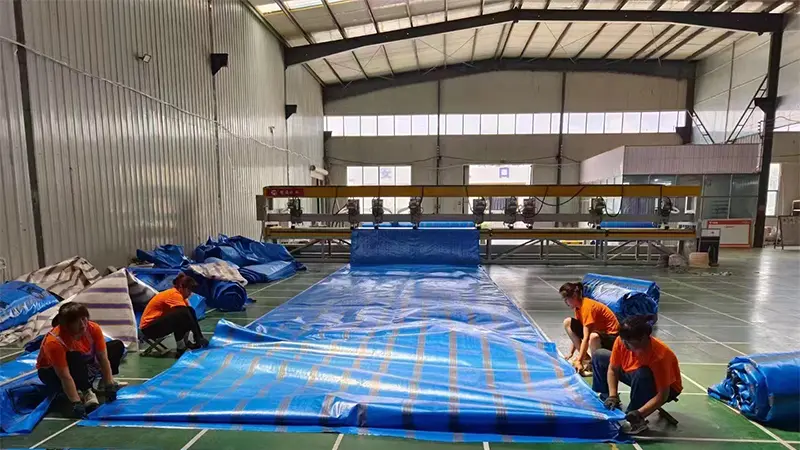
Making-up floor. Panels are laid out, cut square and welded on the table, not stitched.

4.0 m without a join

Most covers fit inside the width of the loom. If yours does, there is no seam to fail.

Welded, not sewn

Heat and pressure fuse the coating on both faces. No needle holes, no thread to rot.

We do not sew

Rope-in hems, webbing loops and zips are sewing work. They stay on your side of the line, and we say so up front.

What the making-up table decides

Cutting and welding look like the simple end of the job. In practice this is where most complaints start: a panel cut 20 mm short, a seam that runs through an eyelet, a diagonal that is out by enough to make the cover twist when it is tensioned.

Two rules cover most of it. Keep the seam out of the eyelet line, and keep the panel count low. A four-panel cover has three seams and three chances to leak; a two-panel cover has one.

Welded seam width

Agreed per order. A narrow weld saves material and fails earlier under load.

Seam position

Kept clear of the eyelet line and away from the fold line wherever the layout allows.

Cut size

Cut to the finished size, allowing for weld take-up. The allowance is agreed, not guessed.

Square and diagonal

Checked on the table. A cover that is square on the diagonal hangs straight; one that is not will fight every fixing point.

Edge finish

Hot-knife or welded hem. Raw woven edges fray in handling and shed tape into the container.

Panel count

Kept to the minimum the width allows. Every extra panel is an extra weld.

Cutting to drawing

Panels cut from the roll to a cutting list, with the weld allowance built in rather than added later.

Heat sealing

Coating fused under heat and pressure on both faces. The weld is as watertight as the sheet around it.

Layout and marking

Eyelet positions and fold lines marked from the same datum, so the holes line up with the frame.

From roll to a marked panel set

Cutting list checked

Finished sizes, weld allowance and eyelet spacing confirmed against your drawing.
Output · Approved cutting list

Cut and welded

Panels cut square with the run direction kept consistent, then fused on both faces and peeled by hand.
Output · Welded assembly with seam record

Marked and folded

Eyelet positions and fold lines marked from one datum, then folded to the packing plan.
Output · Marked, folded and labelled

What the weld depends on

Same fabric, same coat

Polyethylene
A weld is only as good as the two surfaces being joined. Welding a coated edge to an uncoated one gives a seam that peels.
Grades · Both faces coated, same construction on both panels
Limitations · PVC and PE cannot be welded to each other. Mixed-material assemblies need a different joint.
Cost · No extra material. It is a process condition, not a purchased item.

Reinforcement tape

Polyethylene
A tape welded along the eyelet line spreads the load between holes so one eyelet does not take the whole pull.
Grades · Width and weight agreed per order
Limitations · Adds stiffness at the edge and a little weight. Not needed on light covers with low tension.
Cost · Priced by the metre of edge treated.

Edge and hem options

Hot-knife edge

Standard on cut sheets unless a hem is specified
The cut edge is sealed as it is cut, so the tape ends cannot unravel in handling.

Welded hem

Hem depth agreed at order; a shallow hem will pull out under load
The edge is folded and welded, giving a double thickness along the eyelet line without a stitch.

Marked fold lines

Marking: from the approved drawing
Fold lines marked from the same datum as the eyelets, so a crew folds it the same way every time.
Tolerance & acceptance

Cut size

Tolerance agreed at order. Weld take-up is stated on the cutting list, not left to the table.

Seam width

Measured after welding, not on the setting dial.

Diagonal

Checked across both diagonals. A cover out of square is rejected before eyelets are punched.

Eyelet position

Measured from a single datum so the spacing stays consistent along the whole edge.

What to settle before we cut

Design inside 4 m
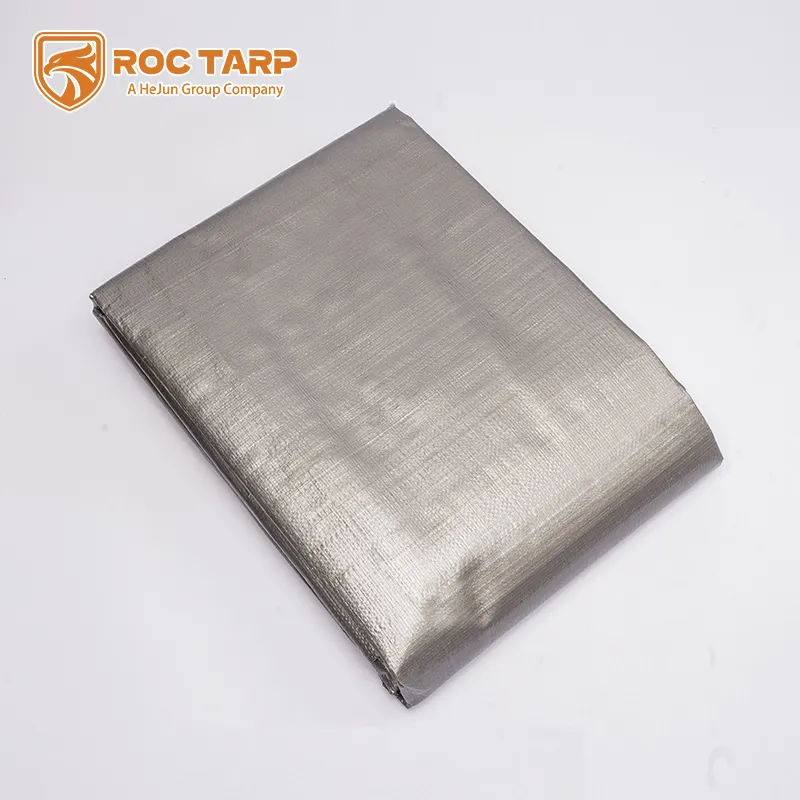
If the cover can be built from one width, build it from one width. A seam costs money and it is the first thing to leak.

Keep seams off the eyelet line

A weld running through a hole means half the eyelet sits on a double thickness and half on a single. It pulls out.

Decide the hem before the cut

A hem consumes 50–75 mm of material per edge. Adding it after the cutting list is approved means recutting.

Say where the sewing is

If your design needs a rope-in hem, webbing loops or a zip, tell us at quoting stage. Those operations are not ours, and pretending otherwise delays the order.

What is checked on the table

Making-up is the last place a mistake can be caught cheaply. Once a cover is folded and palletised, a wrong dimension becomes a freight problem instead of a cutting problem.

So every assembly is squared on the diagonal before eyelets are punched, and every weld is peeled by hand at the end of the run. A weld that lifts is re-done, not trimmed and shipped.

Diagonal

Both diagonals measured on the table before any hole is punched.

Weld peel

Hand-peel at the end of the seam, on every assembly.

Seam position

Checked against the cutting list, specifically that it clears the eyelet line.

Edge seal

Cut edges checked for unsealed tape ends and fraying.

Marking

Eyelet marks counted against the drawing before the panel set leaves the table.

Frequently asked questions

Do you sew hems or seams?

No. We cut and we heat-seal. Rope-in hems, webbing loops, zips and stitched reinforcements are sewing operations and they sit with the customer or their own converter. This is a deliberate boundary — it is the reason our making-up price holds.

Will my cover have a seam?

Only if it cannot fit within 4.0 m. We quote the panel count with the price so you can see whether a seam is being introduced and where.

How strong is a welded seam?

On a coated sheet the weld is normally as strong as the fabric around it — the sheet tears before the seam peels. We still hand-peel every assembly because a bad weld comes from a cold bar or a dirty surface, not from the design.

Can you weld PVC?

PVC-coated fabric is welded by a different process with different temperature and dwell settings. It is quoted separately and not mixed with PE on the same assembly.

What do you need to quote cutting?

Finished size, eyelet spacing, hem depth if any, panel direction on printed material, and the quantity. A sketch is enough; a CAD file is faster.

What is the minimum order?

5 tonnes of fabric per specification. Cutting and welding are quoted as operations on that fabric, not as a separate job.

Send the drawing. We will tell you the panel count.

Finished sizes, eyelet spacing and quantity are enough to start. If the design needs sewing, say so early and we will tell you where the line is.
Capability · Cutting and heat sealing

Leading PE tarpaulin factory in China. Specialized in manufacturing high-quality polyethylene tarpaulins.

  • what'sapp: +86 18561818308marketing@roctarpstarp.com
  • Get an instant quote