
From the first design question to an agreed production release.
Bring engineering, procurement and quality into one reviewable program. Define the next deliverable before committing to the next stage.
Discuss your project
AI-generated component concept · Not factory or customer evidence
A development program is a sequence of decisions. A fit-check model answers a different question from a production-intent sample. This framework connects design, verification, manufacturing and packaging so each release has clear inputs, responsibilities and acceptance criteria.
Select the support scope that fits the maturity of your design. Processes, supplier qualifications, documentation and delivery conditions must be confirmed for the particular project.

Design & Engineering
Turn the intended function into a manufacturing brief that other people can review.
- Inputs
- Application, assembly context, current CAD and drawing, constraints and unresolved questions.
- Work & decisions
- Review interfaces, machining access, material condition, finishing allowance and requirements that drive the process choice. Identify alternatives requiring customer approval.
- Release gate
- A marked-up requirement list, current revision and agreed open actions.
- Scope & responsibility
- Design authority and final engineering approval stay with the named project owner. Scope any design work explicitly.

Verification
Choose prototypes that answer a defined question about fit, function or manufacture.
- Inputs
- Test purpose, features to represent, sample quantity, material assumptions and acceptance method.
- Work & decisions
- Select a prototype route, identify differences from production intent and document evaluation findings.
- Release gate
- Recorded sample feedback, accepted features and a decision to revise or proceed.
- Scope & responsibility
- A visual or fit-check model does not prove structural performance, certification or production consistency.

Mass Production
Release the approved configuration with a defined manufacturing and quality plan.
- Inputs
- Approved revision, quantity or release schedule, final material, finish, critical dimensions and required records.
- Work & decisions
- Reconfirm process scope, sample approvals, inspection checkpoints, change handling and delivery conditions.
- Release gate
- An agreed order scope and release package with responsibilities for acceptance.
- Scope & responsibility
- Capacity, lot size and delivery commitments are confirmed after review. Repeat orders require a current confirmation.

Packaging
Protect the features that matter through handling, transport and receiving.
- Inputs
- Sensitive surfaces, contamination limits, quantity per pack, identification and destination.
- Work & decisions
- Agree separation, protective materials, labels, document handling and the receiving inspection basis.
- Release gate
- A packing and identification specification appropriate to the component.
- Scope & responsibility
- Special transport, export documentation, regulatory marking and customer packaging rules must be included in scope.
Choose the next useful commitment.
Feasibility & next-step review
For a concept or drawing with open manufacturing questions.
Application review, requirement gaps, potential processes and an initial sample objective.
Confirm what remains unvalidated before commissioning a prototype.
Verification to release
For teams preparing an approved configuration.
Prototype purpose, feedback tracking, revision control and production-intent acceptance inputs.
Identify who accepts the sample and which changes require another review.
Production & handover
For a controlled design ready for order planning.
Final manufacturing scope, requested inspection records, identification, packaging and delivery basis.
Approve the controlling revision and order-specific quality package.
Keep the application in the brief.

Review machined components, development hardware and tooling around the drawing, functional interfaces and acceptance package. Establish the required supplier qualifications and documentation before confirming any program scope.
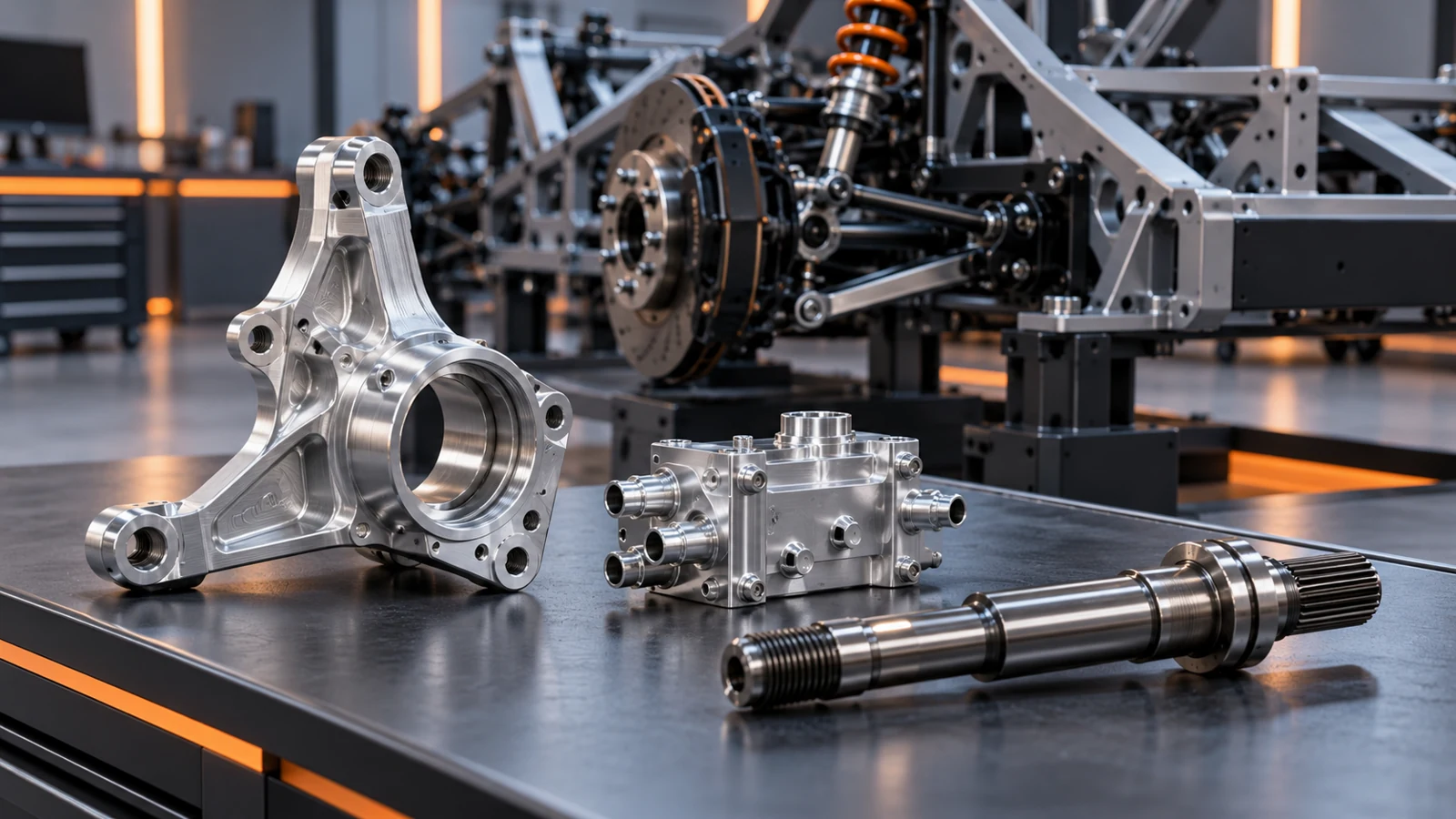
Connect prototype objectives, functional interfaces, material and final-condition requirements. Review the next automotive development or tooling stage with clear approval criteria and a controlled revision.
Clear answers. A defined next step.
Can I enter at a later phase?
Yes. Provide the approved outputs from the previous stage and identify the decision you need to make next.
Is a service package a fixed price or lead-time promise?
No. It defines a discussion scope. Deliverables, commercial terms, feasibility and timing are confirmed for your project.
How are design changes controlled?
Identify the current revision, reason for change and affected features. Review the impact on work, materials, inspection and delivery before release.
Connect your next decision.

Flanges, adapters and custom interface parts need to match the equipment around them. Use the mating details to define what the component must locate, carry or connect.
A housing connects internal components, mounting points and the outside environment. Start with the locating faces and functional interfaces, then review how the pockets, openings and final finish work together.
Bring the requirements. Define the next step.
Share the current drawing revision, material, quantity and acceptance requirements. Feasibility, price and delivery are confirmed after review.

