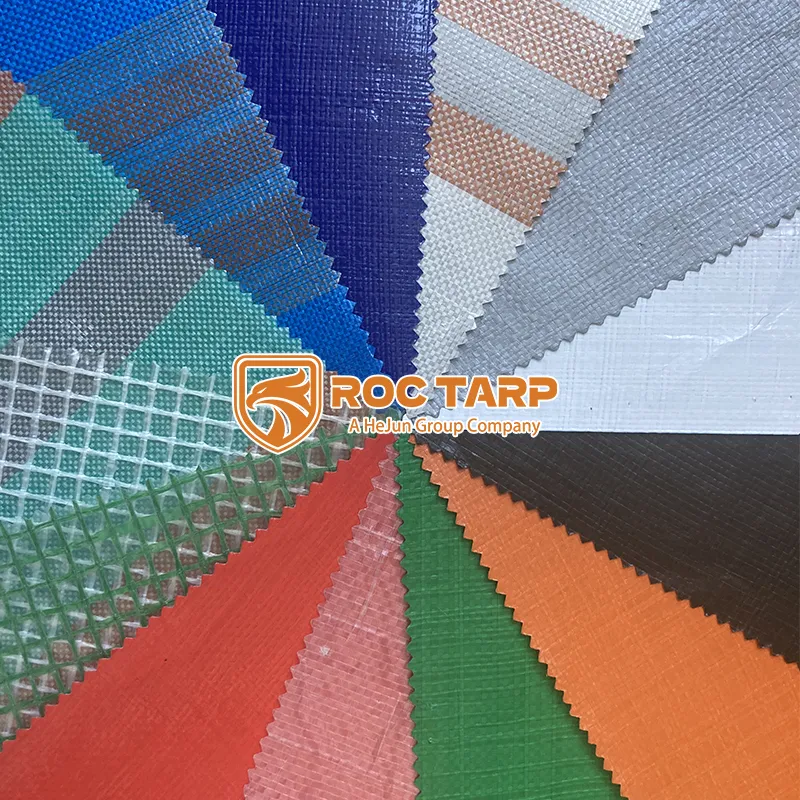
This page is written for the buyer who orders in tonnes and loads containers, not for someone looking for one sheet. If you distribute tarps, stock them for a trade counter, or import under your own brand, the questions that matter are different: what the minimum is, how a mixed container loads, how repeatable the cloth is from one order to the next, and who answers when a roll is wrong.
What wholesale actually means here
We are a manufacturer, not a distributor. We do not hold finished stock for same-week delivery and we do not drop-ship to end users. What we do is run production against a specification, in tonnes, for businesses that sell the goods onward.
That positioning matters because it sets the whole commercial shape: no catalogue of 400 SKUs, no retail packaging, no single-unit pricing. What you get instead is a fixed specification you can reorder, predictable lead times, and the same cloth in the same weight the next time you ask for it — which is what a tarpaulin distributor actually needs to keep a shelf position.
Standard lines and made-to-order programmes
| Standard line | Made to order | |
|---|---|---|
| What it is | A weight and make-width we run regularly | A size, edge and eyelet pattern released to your drawing |
| Minimum | 5 tonnes per specification | 5 tonnes per specification |
| Lead time | 30 days per container | 30 days per container after sample approval; PVC 45 days |
| Sample | Available, freight collect | Made to the released specification, free, freight collect |
| Best for | Trade counters, agri and building merchants | Brands and importers with their own size ladder |
Most first orders are a mix: two or three standard weights to test the market, plus one made-to-order size that matches a competitor’s shelf. Each specification carries its own five-tonne minimum, so a container with four specifications is a twenty-tonne conversation, not a five-tonne one.
How a first container is built
A 40 ft container of PE sheeting is roughly 18–20 tonnes depending on weight and packing, so a first order usually fills one container with three or four specifications. The sequence we recommend:
- Start with two weights. A light sheet for price-led volume and a heavier one for the customers who complain about tearing. Two weights cover most of a trade counter’s demand.
- Fix the size ladder early. Sizes that nest well on a 4.0 m made width waste less cloth, and the waste line is where a cheap quote usually hides.
- Keep one made-to-order size. It gives you a line competitors cannot price-match from a catalogue.
- Agree packing before loading. Bales load denser than cartons; if your customers want cartons, that decision costs volume and should be made before the container is planned.
Repeatability is the real product
Anyone can send one good container. The harder promise is the fourth one. Three things make repeat orders boring, which is exactly what you want:
- Written specification. Fabric, weight, width, cut length, edge, eyelet spacing and packing frozen in one document, referenced on every order.
- Same process route. PE is woven and coated on our own lines, so the cloth does not change hands between orders; annual output above 100 million m² means your specification is not a special run.
- Inspection before the door closes. Count, weight, eyelet spacing and packing checked, with a record you can forward to your own customer.
For PVC grades, the same discipline applies to a heavier cloth at 475–745 GSM, made at 3.2 m, 4.0 m and 5.0 m, on a 45-day cycle.
Documents, packing and the boring details that stop containers
Wholesale buyers get caught less by fabric than by paperwork. We supply the commercial invoice, packing list and the declaration your broker needs, and we will confirm the HS classification with you rather than guess — misclassification is a customs problem that lands on the importer, not the mill.
Packing is agreed per specification: bales for density, cartons for handling, pallets for forklift-only warehouses. What we do not offer is retail-ready packaging. No printed sleeves, no hangtags, no poly bags with barcodes — those need a converting step we do not run.
Where we are the wrong supplier
Being clear about this saves both sides a wasted month.
- You need stock tomorrow. We produce to order; we are not a warehouse.
- You need sewn products. Zips, drawstrings, elastic hems, sewn-in labels, valances — all sewing, all outside our scope. We supply the panels.
- You need drainage fittings, elastic edges or zippers. Not made here, in any quantity.
- You need small mixed pallets. The minimum is five tonnes per specification; a pallet of six different items is a distributor’s job, not a mill’s.
Frequently asked questions
What is the minimum order for wholesale tarps?
Five tonnes per specification. Multiple specifications can share a container, but each one carries its own minimum.
Can I mix PE and PVC in one container?
Yes. They run on different schedules — PE is quoted at 30 days per container and PVC at 45 days — so the loading date is set by the slower line.
Do you supply samples before a container order?
Yes. Samples are free and you cover the freight. For made-to-order sizes the sample is produced to the released specification so you are approving the real thing.
Are you a waterproof tarpaulin supplier or a trading company?
A manufacturer. We weave and coat PE on our own lines and run cutting, welding and eyeleting in a 31,000 m² plant. We do not broker containers from other mills.
Can you hold stock for us between orders?
No. Production is scheduled against orders. If you need continuity, the practical route is a forecast with quarterly call-offs against a fixed specification.
Do you print our brand on the goods?
Printing runs as a separate process with its own minimum and lead time, scheduled alongside cloth production. It is available for wholesale programmes, but it is quoted separately.
Send the weights, the size ladder and the destination port to our team and we will come back with a specification sheet rather than a price list. If your order is one size for one project, the custom tarpaulin route describes that path instead. Both are summarised on the solutions overview.